

In past issues, we’ve covered important legal and political developments involving the Choctaw Nation and other tribes’ interactions with the State of Oklahoma.
Here are the latest updates on these ongoing issues.
Stroble v. Oklahoma Tax Commission
On April 6, the U.S. Supreme Court declined to hear the Stroble v. Oklahoma Tax Commission case, leaving in place an Oklahoma ruling that allows the state to tax the income of a Muscogee Creek tribal citizen living and working on her reservation.
The U.S. Supreme Court’s refusal to hear the case creates new uncertainty surrounding the taxation of tribal citizens, an issue previously thought settled by the 1973 McClanahan ruling, which protected such income from state taxation.
For now, the recent decision doesn’t overturn the McClanahan ruling. However, it does raise questions about the Court’s current stance on tribal law and sovereignty.
Oklahoma Gov. Kevin Stitt applauded the decision, calling it a win for the state and saying that granting exemptions would lead to race-based policies.
“This is about fairness for all 4 million Oklahomans,” Stitt said. “Time and time again, the courts have limited the McGirt decision, rightfully upholding state jurisdiction. This decision made it clear that someone’s tax bill will not be based on their race.”
Many tribal citizens object to Stitt’s use of “race” in the debate over tribal sovereignty, noting the U.S. Supreme Court’s 1974 Morton v. Mancari decision defines tribal citizenship as political, not racial.
“Recent attempts by Gov. Kevin Stitt to characterize these long-established legal protections as a ‘racial preference’ are simply false,” said Muscogee Nation Principal Chief David Hill. “The United States Supreme Court has made it abundantly clear that tribal citizenship is a political classification, not a racial one.”
Following the court’s decision, Gary Batton, Chief of the Choctaw Nation of Oklahoma, released the following statement.
“Unfortunately, the Justices missed an important opportunity to uphold a crucial part of tribal sovereignty. While we are disappointed, we respect the Court’s decision and existing rules,” said Batton. “We will continue to support efforts to clarify jurisdiction in both civil and criminal matters for the protection of all people. This key to protecting our rights as defined by treaties and federal law.”
Hunting and Fishing
The Oklahoma Supreme Court on March 23 unanimously rejected a lawsuit by Gov. Kevin Stitt and the Oklahoma Department of Wildlife Conservation seeking to overturn an opinion by Attorney General Gentner Drummond protecting tribal hunting and fishing rights on reservation land.
The ruling keeps AG Opinion 2025-19 in place and directs the dispute to federal court, where a related case is pending.
The justices said the issue must be resolved at the federal level, not in state court.
Drummond’s opinion called the state’s enforcement actions unlawful and damaging to tribal relations. The Cherokee, Chickasaw and Choctaw Nations say their wildlife codes align with state conservation goals.
“This ruling is another rejection of Gov. Stitt’s unlawful campaign against tribal citizens,” Drummond said.
Choctaw Chief Gary Batton called the decision a confirmation of tribal sovereignty and long-recognized hunting and fishing rights.
A separate federal lawsuit seeks to stop the state from enforcing wildlife laws against tribal citizens within reservation boundaries.
State officials say tribal members are still subject to state regulations.
Purchase of Big Lots Distribution Center
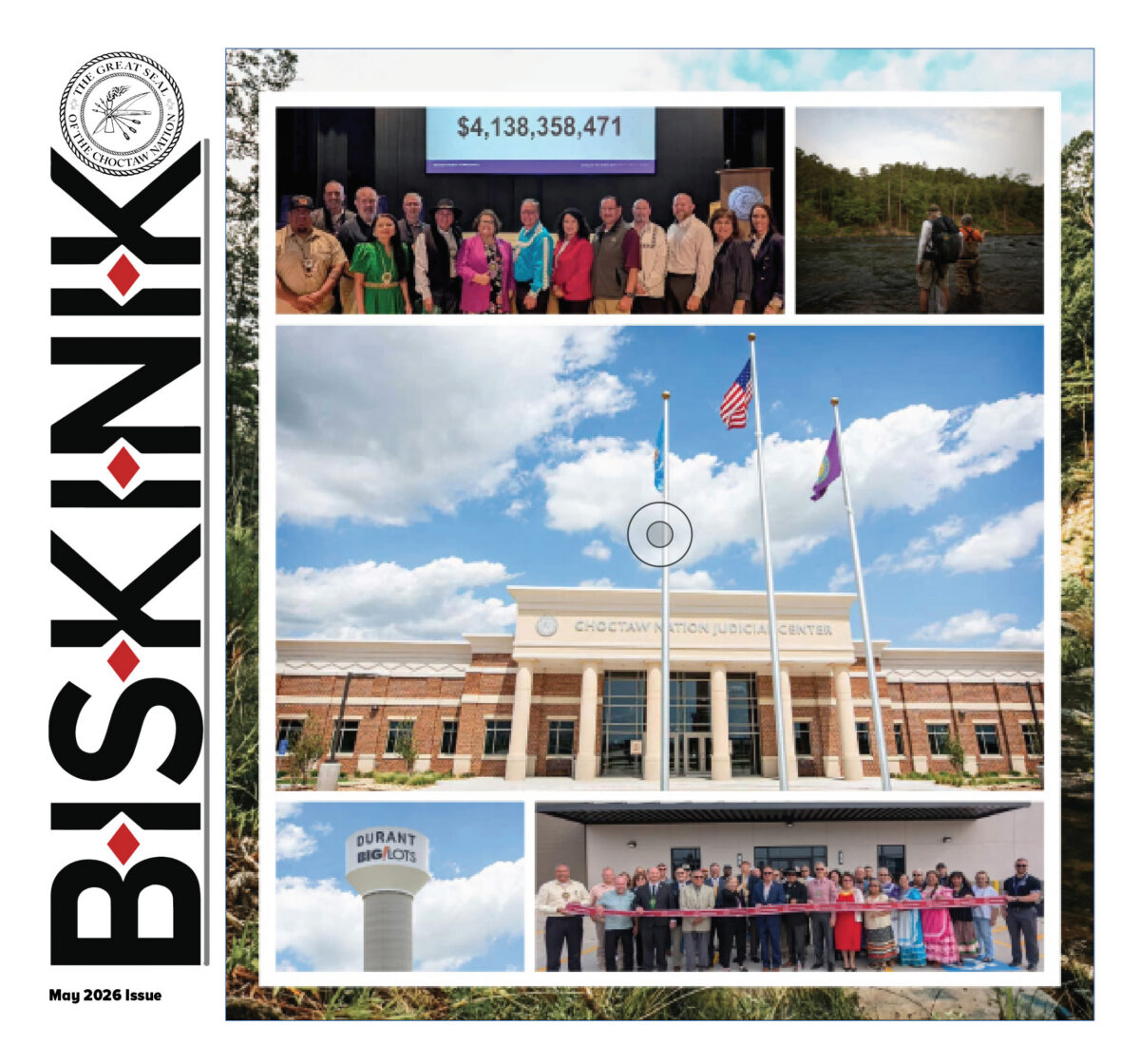
The Choctaw Nation of Oklahoma has purchased the former Big Lots distribution center in Durant, ending months of uncertainty about the property’s future.
Big Lots filed for Chapter 11 bankruptcy in September 2024, closing more than 315 stores nationwide, including the Durant center.
The closure left the 1.2 million-square-foot facility vacant and about 330 employees jobless.
Rumors circulated about a potential sale, with speculation that the site could become an Immigration and Customs Enforcement (ICE) detention center.
Amid ongoing speculation, on Nov. 24, the City of Durant released an official statement addressing those concerns:
“Mayor (Martin) Tucker was recently contacted by a media outlet, and City officials have reason to believe that a detention center is being considered for the Big Lots facility in Durant. At this time, the City has not been directly contacted regarding this proposed facility. We are currently evaluating the appropriate measures the City should take to ensure the continued prosperity, well-being, and growth of Durant.”
The potential for a detention facility drew concern not only from residents but also from Choctaw Nation leadership.
On Jan. 10, 2026, the Choctaw Nation Tribal Council passed a resolution stating its opposition to any ICE detention facility in Durant.
On Jan. 13, social media posts urged residents to attend a Durant City Council meeting to oppose the proposed facility. That day, Chief Gary Batton told local media the Choctaw Nation did not support a detention center and was interested in acquiring the property.
Later that day, the Durant City Council passed an ordinance requiring a conditional use permit to own or operate a detention center within city limits.
On March 25, the Choctaw Nation announced it had purchased the Big Lots distribution center and confirmed the acquisition in a press release.
“We are evaluating how to use this adjoining property as part of our efforts to support operational growth and exploring a variety of potential uses that align with our strategic vision,” the release stated. “This is an opportunity to enhance our presence and continue driving economic prosperity for our tribal members and the surrounding community.”
The following day, a Facebook post about the purchase went viral, amassing more than 120,000 likes and 20,000 shares. The Occupy Democrats post described the purchase as the Choctaw Nation “crushing” a proposed ICE detention center, drawing national attention to Durant and the tribe’s actions.
The Choctaw Nation has not announced plans for the property.
McAlester Judicial Center
Marking a significant step towards expanding tribal justice, the Choctaw Nation of Oklahoma celebrated the opening of its new McAlester Judicial Center with a ribbon-cutting ceremony held on April 3.
Located at 1129 S. George Nigh Expressway in McAlester, the new Judicial Center will address cases from Hughes, Haskell, Latimer, LeFlore, Pittsburg and Coal counties.
Tribal officials said the new center will improve access to court services in the reservation’s northern region, where many cases originate.
“More than 40 percent of cases filed in the Choctaw Nation District Court originate from the northern counties of the reservation,” said Chief Justice David Burrage. “These figures make clear that placing a courthouse in McAlester is not just strategic, but essential to expanding access to justice and strengthening the effectiveness of our court system.”
The new facility will reduce congestion at the Durant Judicial Center and shorten travel for families in guardianship, divorce, and juvenile cases.
The McAlester Center will house probation, public defenders, and prosecutors, bringing together key justice partners to enhance efficiency and community support.
“Established by Constitution in 1836, the Choctaw Nation Judicial Department has grown and evolved with the changing needs of our citizens,” said District 11 Council Member Robert Karr. “Today, our new Judicial Center will provide accessible, fair justice with integrity and compassion to all.”
The opening expands the Choctaw Nation’s judicial infrastructure as demand grows across its jurisdiction.
Economic Impact
The Choctaw Nation of Oklahoma recently reported a $4.1 billion economic impact on the state in 2023, supporting nearly 27,000 jobs and paying $1.65 billion in wages and benefits, according to a new report by economist Dr. Kyle Dean.
Building on the economic impact, the Tribe continued to prioritize education, paying $45.1 million to the state through gaming fees and investing more than $72 million in educational programs. The Choctaw Nation funded over 12,000 college scholarships and supported thousands of students in summer and early childhood programs.
These efforts reflect the Tribe’s commitment to strengthening local communities and ensuring a bright future for all Oklahomans by providing resources and opportunities.
Future Developments
The Biskinik will continue to report on these issues and provide readers with information as these stories develop. In the meantime, it is always important to stay informed.
To keep up with what is happening in the Choctaw Nation, follow the official Choctaw Nation social media pages and visit choctawnation.com.
We also invite you to check out biskinik.com for more content and breaking news.