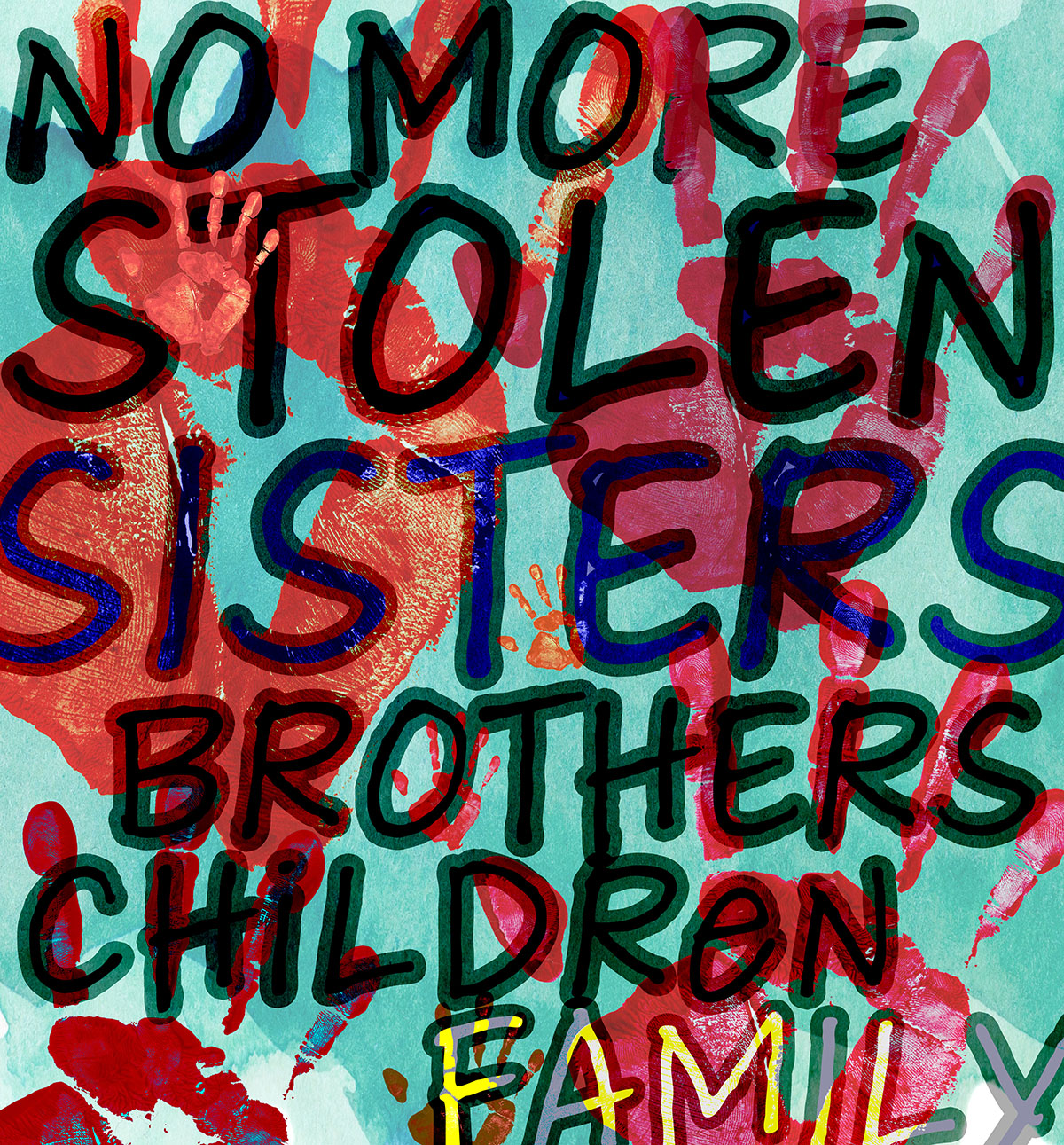
Missing and Murdered Indigenous People Awareness Month may be over, but the Choctaw Nation of Oklahoma and others continue efforts to raise awareness.
Families across the country still search for answers as tribes and advocates address the MMIP crisis.
May 5 is observed as the National Day of Awareness for Missing and Murdered Indigenous People, drawing attention to an issue that has long been underreported.
In recent years, the U.S. government has increased efforts to address gaps in MMIP data.
During President Donald Trump’s first term, he signed a 2019 proclamation designating May 5 as the MMIP National Day of Awareness. He also signed Executive Order 13898, known as Operation Lady Justice, as well as the Not Invisible Act and Savanna’s Act into law, all of which were aimed at addressing MMIP.
Those legislative efforts and federal momentum continued during President Joe Biden’s administration. However, the Trump administration’s approach seemingly shifted at the start of his second term.
In March 2025, a key MMIP report was removed from federal websites, as part of an effort to eliminate diversity, equity, and inclusion (DEI) materials.
The “Not One More” report, created under the Not Invisible Act, was widely regarded as a major effort to address systemic challenges surrounding MMIP in the U.S.
The act, signed into law during Trump’s first term, was the first U.S. bill introduced and passed by four members of Congress enrolled in federally recognized tribes.
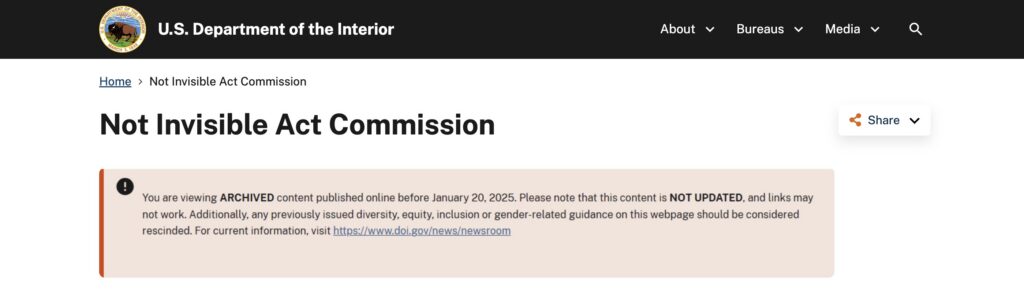
Over a year later, a webpage about the act remains, but the November 2023 report is gone. A notice says the content is archived and DEI-related guidance is rescinded.
While “Not One More” data is inaccessible, existing national statistics continue to highlight the severity of the issue.
CDC data show homicide was the fourth-leading cause of death for American Indian and Alaska Native males ages 1–44, and sixth for females in 2023.
A 2016-17 CDC survey found over 2 in 5 non-Hispanic American Indian and Alaska Native women (43.7%) have experienced rape. Significant reporting gaps remain.
In 2016, over 5,700 Indigenous women and girls were reported missing, but only a fraction were entered into federal databases. Thousands remain unsolved.
A 2023 Criminal Justice Policy Review study found the bodies of Native American women are 135% more likely to go unidentified than those of other groups in the U.S.
The crisis is not limited to women. Indigenous men also face high rates of violence.
The FBI’s 2022 National Crime Information Center report listed 10,123 missing persons identified as Native American. Of those, 54% were female, 46% were male, 68% were younger than 18 and 32% were adults.
LGBTQ+ and Two-Spirit individuals also face disproportionate risks, though limited data make the full scope difficult to measure.
Research from the Transgender Law Center reports that since 1990, at least 25 transgender and Two-Spirit Indigenous people have been reported killed or missing.
“The lack of reporting and knowledge about the plight of trans and Two-Spirit people in Native communities is one way that violence persists,” the organization states on its website. “Trans and Two-Spirit Native people have been erased as if they never existed in the first place.”
As federal attention to the MMIP crisis has grown, so have questions about what comes next. Advocates, experts and tribal leaders have raised concerns about whether those efforts will continue as federal priorities and funding evolve.
In 2025, the U.S. Department of Justice canceled 373 safety and justice grants to 221 organizations.
Subawards to 362 others were also terminated, affecting 554 organizations in 48 states and territories.
The cancellations rescinded nearly $820 million in funding, much of it supporting nonprofits and nongovernmental organizations serving Indian Country.
As of May 2026, only a small number of those grants have been restored after appeals. Others remain unresolved or were permanently terminated.
Funding uncertainty has been compounded by delays in releasing grant funds, attributed to reduced staffing and extra review requirements.
At the state level, Oklahoma ranks among the most affected by the MMIP crisis. Both rural and urban areas, including southeastern Oklahoma, have felt the impact.
The crisis persists due to underreporting, lack of awareness, jurisdictional challenges and limited investigative resources, all of which delay responses and complicate cases.
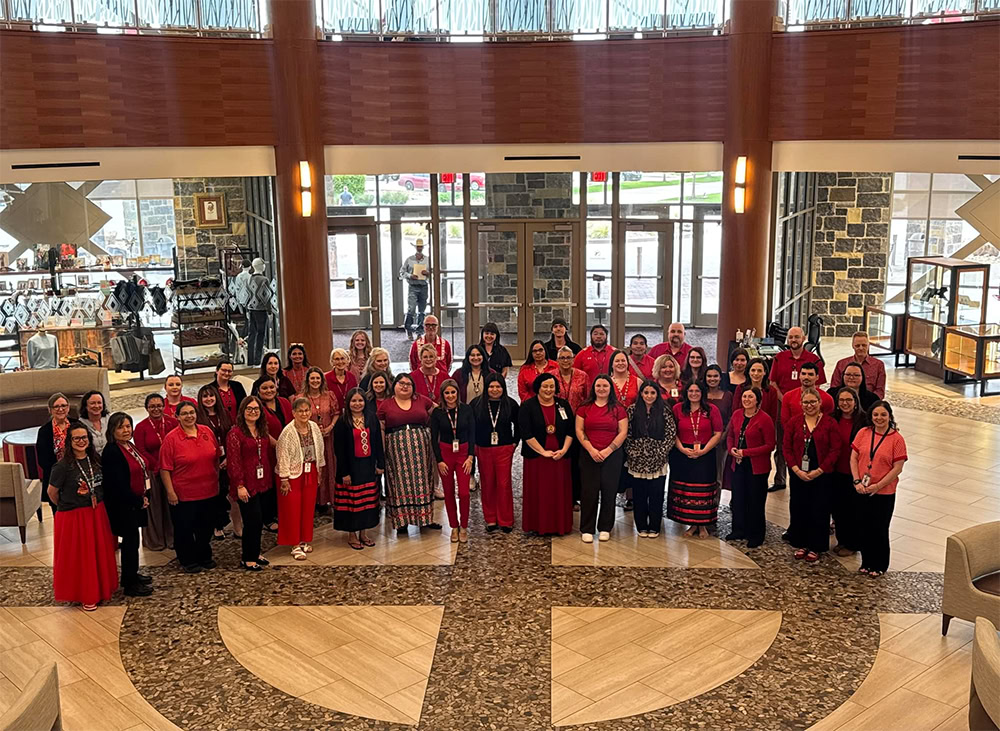
Within the Choctaw Nation of Oklahoma, raising awareness is key. Tribal leaders, law enforcement and community members stress vigilance, communication and support for families. Red dress campaigns and awareness events honor the missing and their loved ones.
Choctaw Nation Outreach Services hosted its annual MMIP 5K and 1-mile run May 9 in Antlers. Participants gathered to raise awareness and honor those affected.
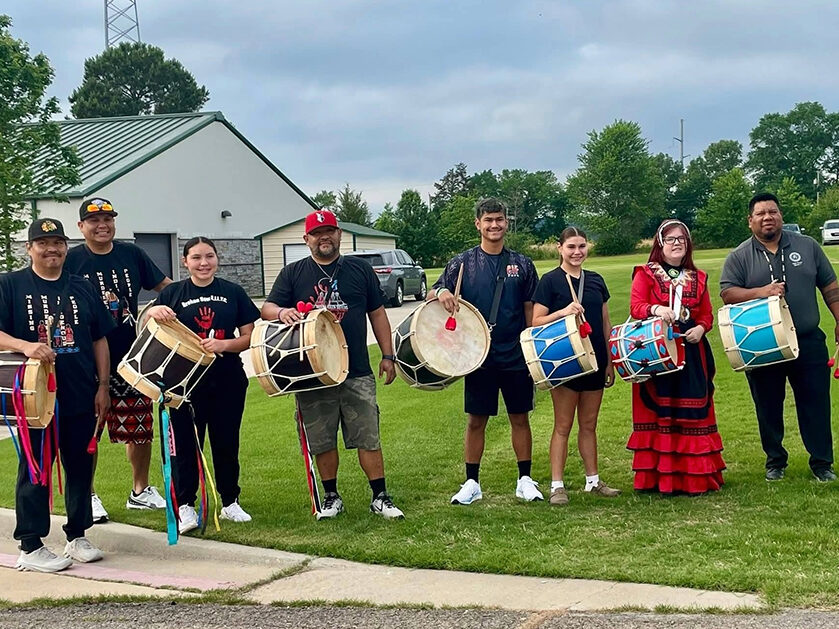

Choctaw Nation Lighthorse Police and other tribal departments work with local, state and federal partners. Officials say collaboration and timely reporting are critical to improving outcomes of MMIP cases.
Lighthorse Police also work with the tribe’s outreach and victim services programs to help ensure cases are reported quickly and that affected tribal members receive support and resources.
The department collaborates with local, state and federal law enforcement agencies, as well as advocacy groups such as MMIW-Chahta, to support education and outreach efforts.
While there is no comprehensive public list of MMIP cases specific to Choctaw Nation tribal members, officials encourage anyone with information about a missing person to contact law enforcement immediately. Resources such as the National Missing and Unidentified Persons System, or NamUs, and the Bureau of Indian Affairs also assist in tracking and investigating cases.
Advocates say the MMIP crisis is not just a statistic, but a deeply personal issue affecting Indigenous people across generations.
MMIP Resources
Choctaw Nation
Family Violence Prevention
Provides resources and support to strengthen families and protect victims of domestic, family or dating violence.
Project SERV
Transitional housing program for survivors of intimate partner violence facing homelessness, with stays from 6 to 24 months.
Tribal Victim Assistance
Offers comprehensive services like emergency aid, shelter, counseling and advocacy for crime victims.
Behavioral Health
Provides a variety of mental health services for all ages.
Project EMPOWER
A coordinated system of care helping domestic violence victims secure housing, childcare and essential services as they rebuild their lives.
Tribal Victim Services
Guidance for victims of crime and their families with counseling and therapy.
Essential Life Skills
Provides assistance to qualified adult, youth and child victims of crime.
Sexual Assault Nurse Examiner Program (SANE)
A specialized service that provides compassionate and expert care to individuals who have experienced sexual assault or abuse.
Lighthorse Police & Public Safety
Patrols and manages the 10,864-square-mile reservation. For emergencies, call 580-920-7000; non-emergencies, call 580-920-1517.
Oklahoma:
MMIW-Chahta
Missing and Murdered Women-Chahta serves Tribal communities impacted by violence through advocacy, resources, and partnerships. Contact via Facebook or their website.
MMIP Central Oklahoma Chapter
Missing and Murdered Indigenous People Central Oklahoma Chapter supports families by searching for missing relatives, seeking justice, advocating and raising awareness. Contact via Facebook or their website.
National:
STRONGHEARTS Native Helpline
24/7 helpline supporting Native individuals affected by domestic and sexual violence. Call/text 844-7NATIVE or chat online by clicking the chat icon to connect anonymously with an advocate.
The Tribal Resource Tool
Tribalresourcetool.org is a searchable map of victim services for survivors of crime and abuse.
BIA Victim Assistance Program
Through this program, the BIA Office of Justice Services aids victims in Indian country with crisis intervention and support.
National Indigenous Women’s Resource Center
NIWRC is a Native-led nonprofit ending violence against Native women and children.
Wear Red
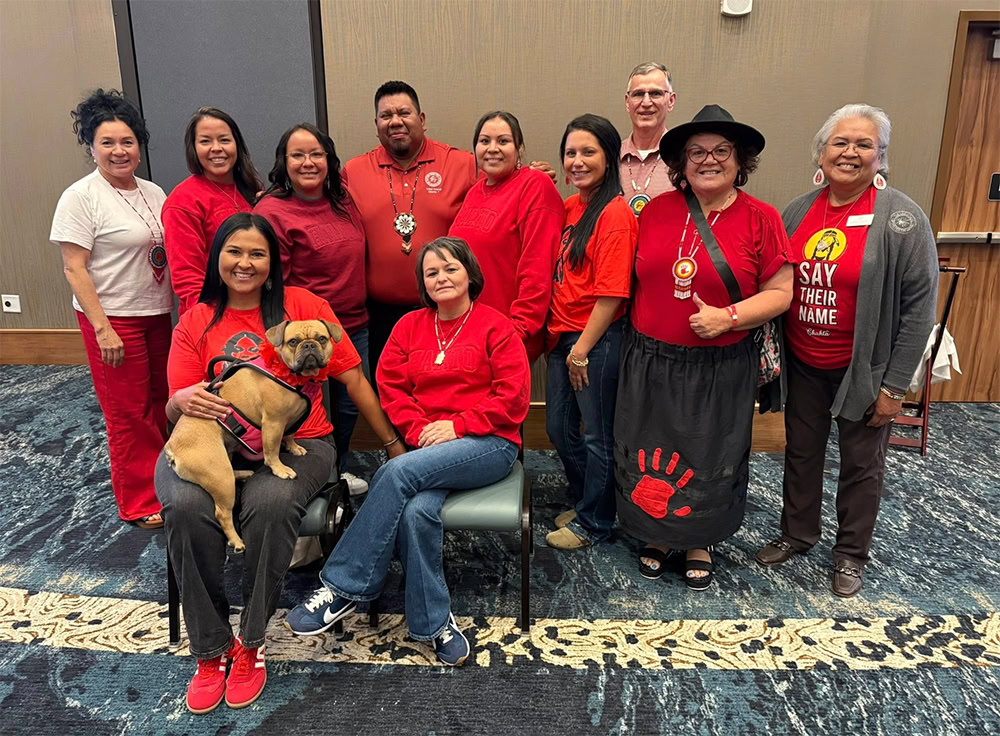
Tribal Council and staff.
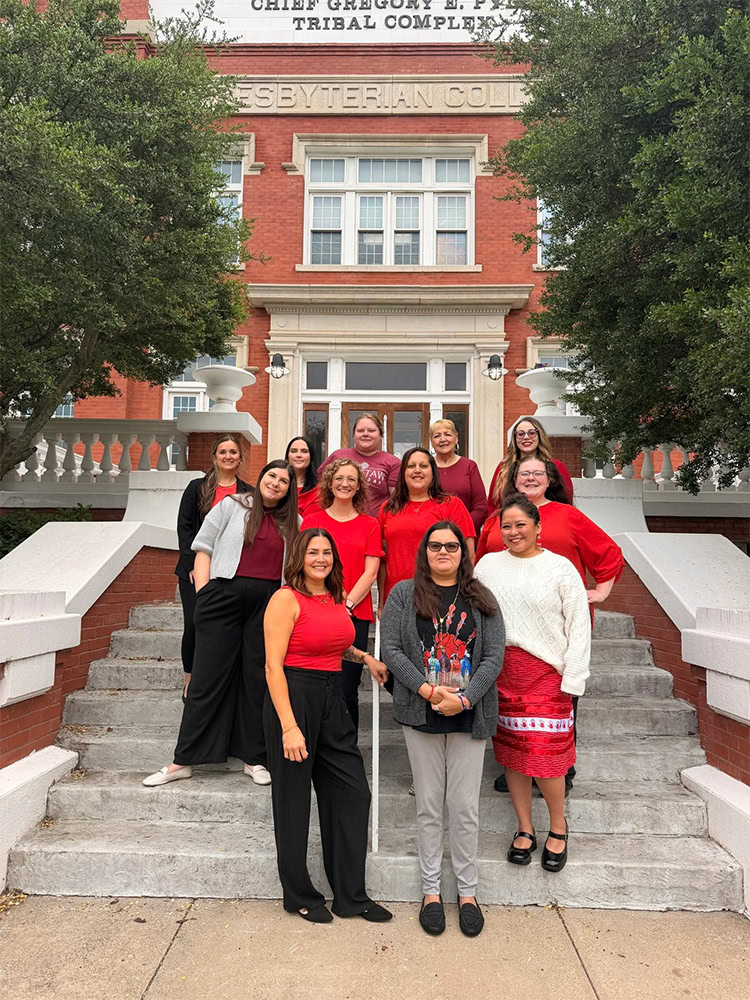
CNO Tribal Prosecutors’ Office.