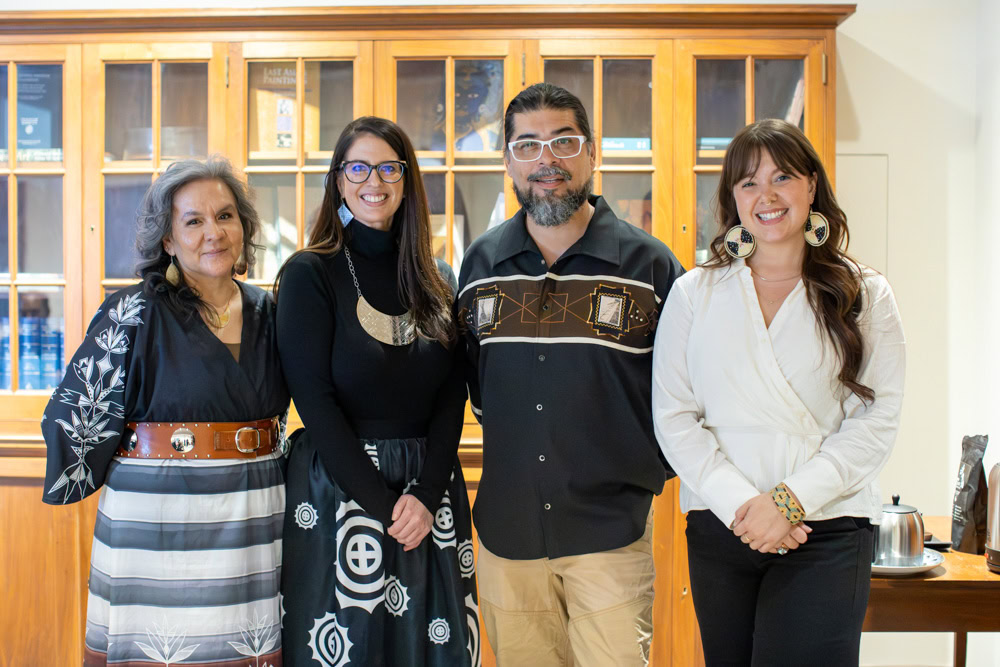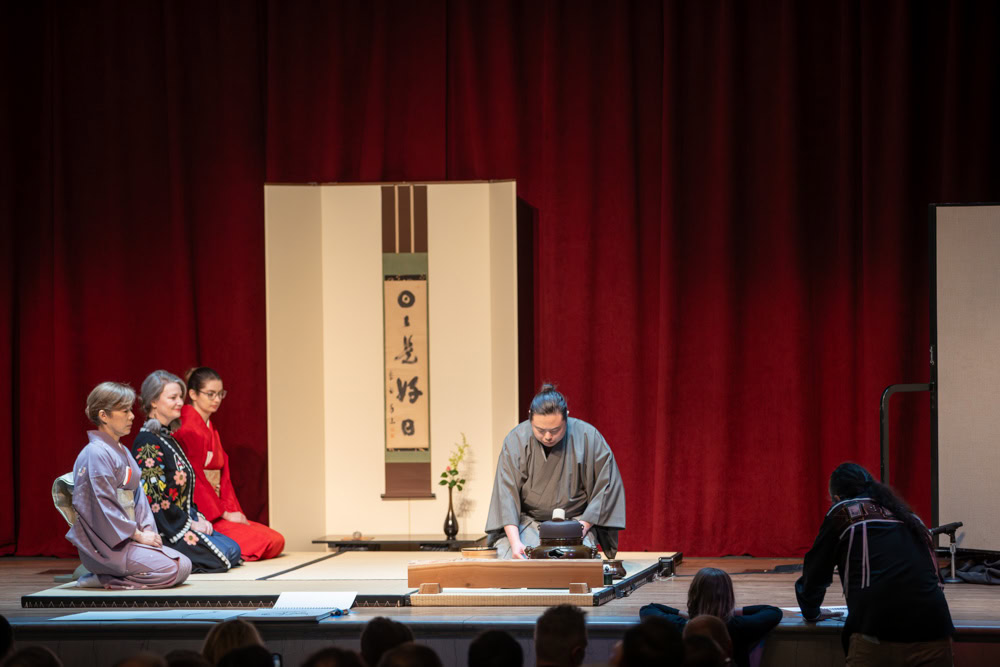
Choctaw artist D.G. Smalling served as the chronicler during a Japanese chanoyu tea ceremony March 28 at the Smithsonian’s National Museum of Asian Art, where Choctaw and Japanese traditions intersected in a public display of hospitality and cultural preservation.
The Urasenke Tankokai Washington, D.C. Association hosted the event, centering on the practice of chanoyu (literally, “hot water for tea”). This tea practice involves preparing and drinking matcha, a powdered green tea. The hosts presented koicha, kneading matcha into a paste with hot water to create thick tea.
Koicha is traditionally served as the first round of matcha during a formal chaji tea gathering, following a kaiseki, or multicourse meal. Usucha, or thin tea, is featured in the second round and is prepared by whisking matcha with hot water, the standard style familiar to many people.
Attendees silently observed as presenters prepared koicha, watching the ceremonial movements and utensils unique to this longstanding tradition. Smalling expanded the museum’s annual chanoyu program through a creative collaboration. Acting as chronicler, he created live drawings in his signature single-line style, documenting the utensils, participants, atmosphere, and details of the gathering./i
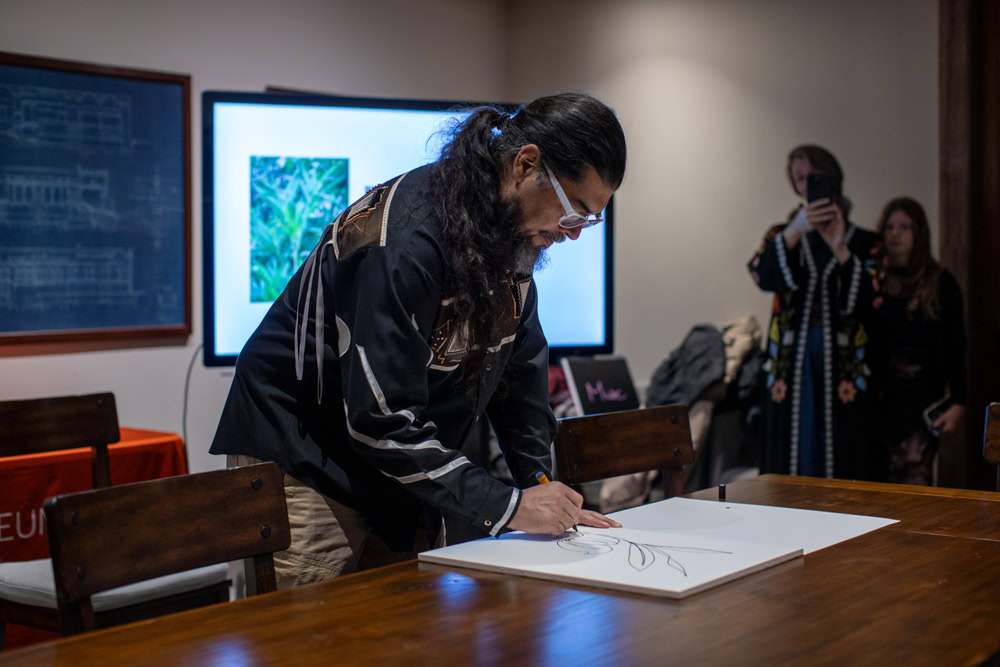
His role drew upon the historic Japanese practice of kaiki, or record of a gathering, associated with 16th-century tea masters. In the Japanese tea tradition, the chronicler served as recorder and witness, ensuring the event’s memory endures through disciplined observation rather than reinterpretation or leadership.
“This afternoon marks an intercultural moment in which a Native American master artist serves in the role of the chronicler within the Japanese tea context. This is not a cultural fusion, but disciplined witnessing between sovereign nations and their traditions,” said Sol Jung, assistant curator of Japanese art at the National Museum of Asian Art.
The museum selected tea utensils for the presentation from the Kinsey Chanoyu Collection, a gift Gregory Kinsey gave to the National Museum of Asian Art. As a longtime tea practitioner and former museum trustee, Kinsey collected these pieces for his personal practice.
The museum added nearly 170 objects to the Freer Study Collection for use in public programs and events focused on traditional Japanese tea preparation. It chose another 16 objects, noted for their artistic and historical importance, for the permanent Freer Collection for future research and exhibition.
The ceremony celebrated the enduring spirit of cultural exchange between the United States and Japan on the 250th anniversary of the Declaration of Independence. Artwork created by Smalling during the ceremony was displayed after the presentation.
Smalling, Choctaw Nation of Oklahoma tribal member, is internationally recognized for his precise single-line drawings that emphasize beauty, simplicity, and human dignity. His work can be viewed at dgsmalling.ai.
For more information or to watch the annual chanoyu presentation, visit asia.si.edu.