


From the Capitol Grounds at Tvshkahomma to roughly 500 miles of roads stretching between Mississippi and Oklahoma, members of the Choctaw Nation of Oklahoma spent time in May honoring the resilience of their ancestors.
Both events remember the forced removal of the Choctaw people from their homelands following the Indian Removal Act of 1830 and the Treaty of Dancing Rabbit Creek. Thousands died from disease, starvation, exposure and violence during the journey to Indian Territory in present-day Oklahoma.
Trail of Tears Walk
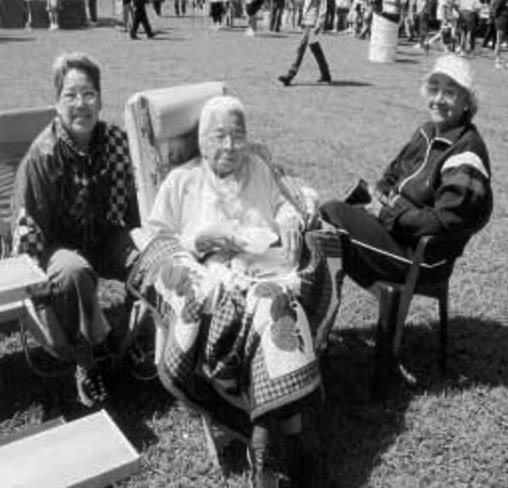
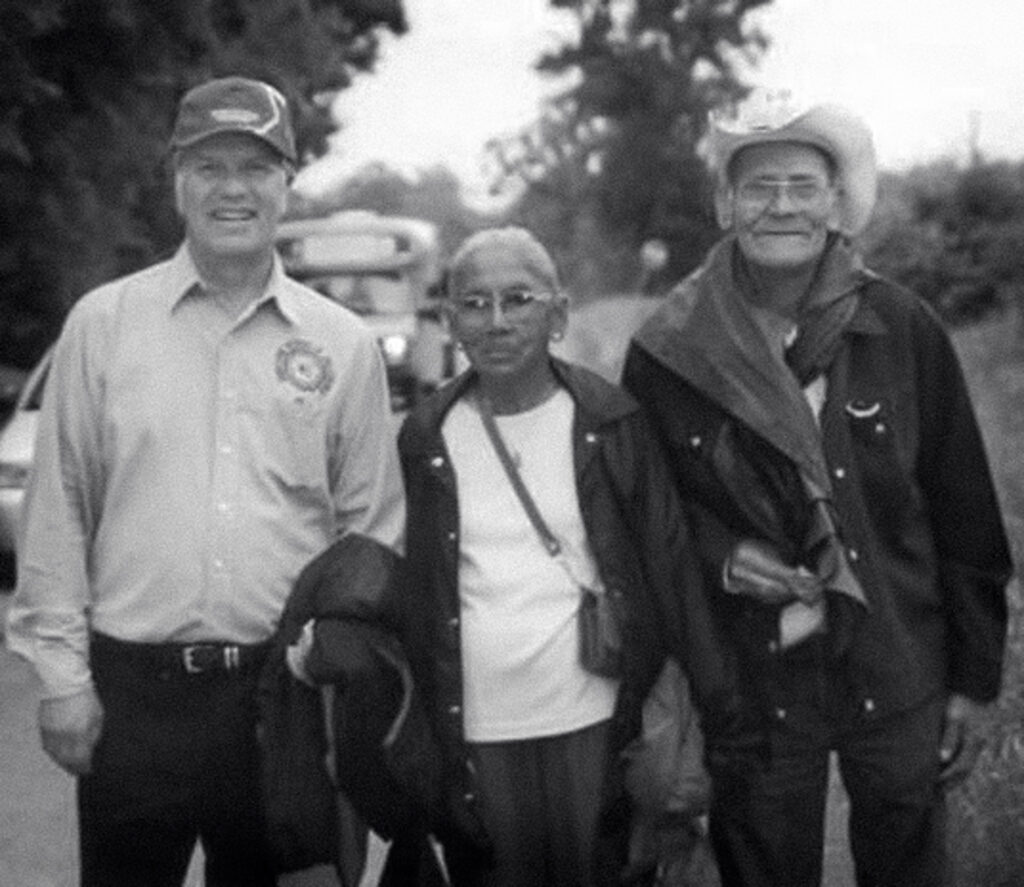
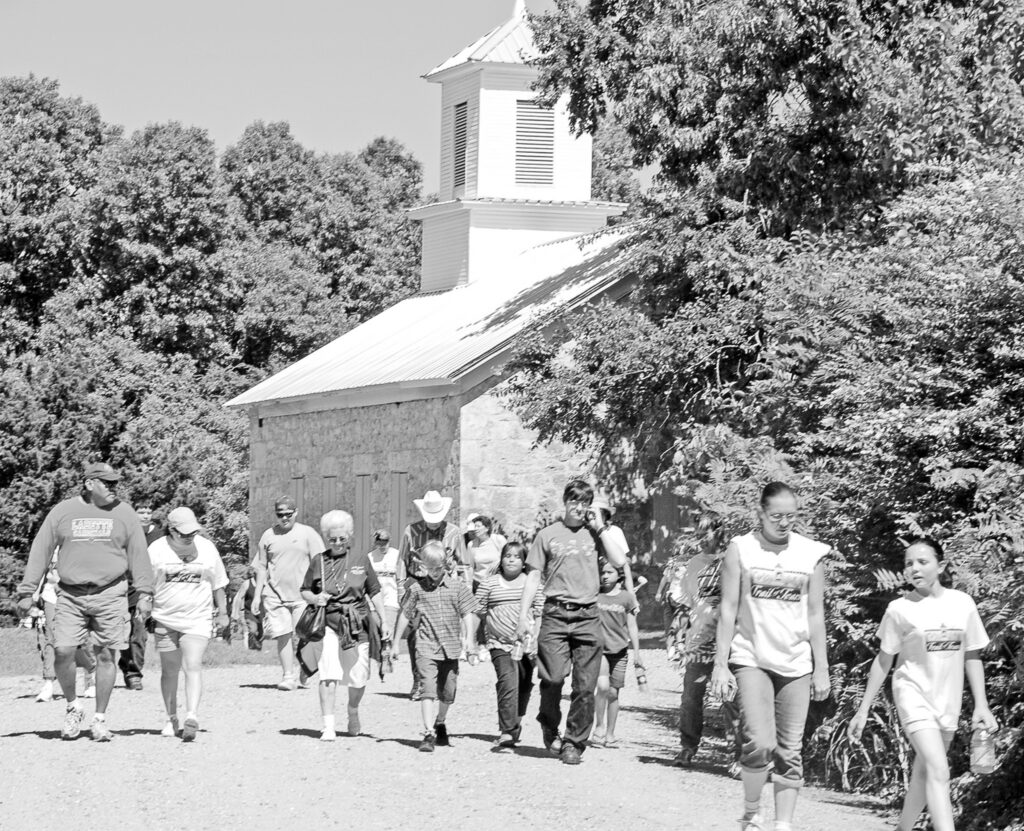
Nearly 700 people gathered at Tvshkahomma on May 16 for the annual Trail of Tears Walk. This year’s walk featured a new route with Choctaw hymn singers stationed along the path.
Irish Consul General Robert Hull joined the pre-walk ceremony to commemorate the 179-year friendship between the Choctaw and Irish peoples.
During the ceremony, Chief Gary Batton presented Hull with a framed print of Jane Semple Umstead’s painting “Irish Gift.” Hull also joined the walk, alongside Chief Batton and Assistant Chief Jack Austin Jr.
The walk coincided with the Irish remembrance of the Great Famine of 1847, when the potato crop failed, and many were starving. Having just endured their own forced removal from their homelands, the Choctaw people sympathized with the Irish and gathered $170 (approximately $5,900 today) for the relief fund. The two nations have been close ever since.
In his speech, Chief Batton spoke of the resilience of the Choctaw people, past and present.
“We live in a strong, sovereign nation because of their strength and sacrifices made from that horrible journey,” Batton said. “May we never forget the legacy that they set and may we bring honor to them every day by striving to live out the vision and prayers that they had for our people.”



Trail of Tears Bike Ride
While participants gathered at Tvshkahomma, the Choctaw Nation Trail of Tears Bike Team was beginning its own 500-mile journey of remembrance hundreds of miles away.
The team departed Tupelo on May 16 and traveled much of the same route Choctaw ancestors followed during removal. Along the weeklong ride, cyclists stopped at sites significant to Choctaw history, including Creek Village, where deep ravines and embankments remain visible from the thousands of people who once traveled the route on foot.
On May 22, the team of 11 riders arrived at Choctaw Nation Headquarters in Durant, where supporters welcomed them with signs and cheers.
The ride is grueling and sometimes dangerous. During the journey, Jana Pisachubbee-Boykin broke bones in her hand and wrist, and Teresa Eagleroad suffered from heat exhaustion. However, the riders accepted the challenge to continue in honor of their ancestors.
“We want to take a look back at what they went through and what they had to endure,” Pisachubbee-Boykin said. “Even though we were on bicycles, and they were on foot, we still feel a challenge set for us.”
Eagleroad echoed that sentiment, saying, “It was an experience for me to follow in their steps and be able to see the culture that I never knew was out there.”
Follow the Choctaw Nation Trail of Tears Bike Team on Facebook for more info on the ride.



The History
Both the walk and ride commemorate one of the most significant events in Choctaw history.
Until 1830, the Choctaw people occupied a vast area of land, spanning from modern-day Mississippi to Alabama. As the United States pushed its own boundaries westward, President Andrew Jackson and Congress instituted the Indian Removal Act, which drove thousands of Native Americans to relocate from their ancestral homelands to the newly formed Indian Territory in modern-day Oklahoma.
The Treaty of Dancing Rabbit Creek, signed under coercion on September 27, 1830, forced the Choctaw Nation to cede the last of its remaining lands to the United States.
The journey was brutal, and the Choctaw people alone lost about a quarter of their population to starvation, exposure, illness and violence along the way. Other tribes suffered equally devastating losses. Over the next 70 years, several removals took place in waves, the final one being in 1903, when a final group was sent by train to Atoka, Okla.
Chief Batton sees the Trail of Tears as one of the most important moments in tribal history and often credits the resilience and ingenuity of Choctaw ancestors for setting up the Nation’s success today.
“A story of love, a story of strength, perseverance, endurance—all those types of things,” said Batton. “It’s a wonderful story. It’s not a sad story. Yes, we went through trials and tribulations but look at what the Choctaw Nation has become today.”
Visit the Iti Fabvssa archives for more Trail of Tears information.