


By Chris Jennings
Summer brings beach trips, backyard barbecues and long days in the sun. That’s why July is recognized as UV Safety Awareness Month, highlighting the need for sun-safe habits.
According to the Centers for Disease Control and Prevention (CDC), Native Americans are the second-highest group to get melanoma, a type of skin cancer.
Choctaw Nation health experts have a message for anyone who thinks their darker complexion shields them from the sun’s damage: it doesn’t.
“It is a myth that if you have a darker skin tone, then you don’t have to worry about getting sunburned,” said LaRoche, a public health director with the Choctaw Nation Health Services Authority (CNHSA). “You still need sun protection, no matter what your complexion is. It can still damage you in the same way. It just might not be as apparent to our eyes.”
A study published in the Journal of the American Medical Association (JAMA) Dermatology found that Native Americans have the second-highest rates of skin cancer in the United States, surpassed only by white Americans.
Ultraviolet radiation is emitted by both the sun and artificial sources. While it has some benefits for people, including the creation of Vitamin D, it can also cause health risks.
“UV is radiation that’s emitted from the sun,” said Mason Emert, an epidemiologist with CNHSA. “It’s, of course, naturally occurring, but it’s a risk factor associated with skin cancer.”
You can be exposed to UV rays from artificial sources, such as tanning beds, and from certain lighting equipment, including mercury-vapor and some halogen, fluorescent, and incandescent lights. Whether those UV rays are natural or artificial, the effect on the body is the same.
“It poses a risk to human health because it damages the skin barrier,” Emert said. “It can reduce your immunity barrier, increase the risk of skin cancer, cause dry skin or other skin conditions, and, like any other form of radiation, it can be a harmful component to human health.”
LaRoche added that eyes are often overlooked in conversations about sun safety. Over time, prolonged UV exposure accelerates the breakdown of eye tissues, significantly raising your risk of developing cataracts, macular degeneration and abnormal growths.
How Exposure Happens
It’s not just bright, sunny days that can lead to ultraviolet exposure. UV risk can still be high, even on cloudy days.
“Dermatologists typically still recommend wearing sun protection, SPF 30 or higher, even when it’s cloudy outside or with only brief outdoor exposure,” Emert said.
LaRoche added that cool or overcast days may actually be when people sustain the most damage because they let their guard down. “We tend to not apply our sunscreen or take proactive measures. If it’s not hot outside or if it’s cloudy outside, that doesn’t mean that the UV is not harmful. It’s still there.”
Peak UV hours run from 10 a.m. to 4 p.m. LaRoche recommends a simple tool most people already carry.
“Most weather apps on your smartphone have the UV index for your area that’s really easy to check.”
Checking the daily index before heading out, whether for work, a sporting event or any outdoor activity, allows people to plan their protection before exposure.
The Base Tan Myth and Cumulative Damage
Another common belief health professionals hear is that getting a base tan before extended sun exposure somehow reduces the risk of a burn. Emert says that’s not the case.
“Any form of a tan from UV exposure is skin damage from the UV radiation,” he said. In other words, pre-tanning to prevent sun damage is giving yourself skin damage to prevent skin damage.
The danger also grows over time. Emert described UV exposure as cumulative, with some individual burns rising to the level of what dermatologists call a “life-changing sunburn,” one that increases a person’s long-term skin cancer risk on its own.
“The greater exposure, of course, has a greater risk of adverse effects,” he said.
That means people who have spent years working outdoors, like farmers and construction workers, are more likely to have accumulated risk, even if they’ve never had a single serious burn. The good news, Emert said, is that it’s never too late to start protecting yourself.
“You can’t necessarily reverse the skin damage, but you can prevent further damage,” he said. “Reducing that risk and reducing that greater exposure would be beneficial.”
Building the Habit
The National Weather Service recommends the following five tips for sun protection:
- Check the UV index forecast before you go out.
- Apply and reapply sunscreen.
- Seek shade.
- Wear sunglasses.
- Wear protective clothing.
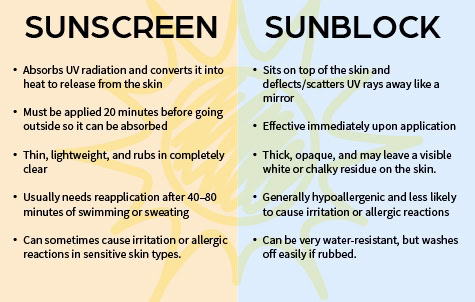
When it comes to sunscreen, the recommendation is SPF 30 or higher, applied generously, about one ounce for the full body 30 minutes before going outside, then reapplied every two hours or after swimming or sweating.
For active use, products labeled as sport or mineral formulas tend to stay on longer.
“The best sunscreens are the ones you’ll continuously use daily,” Emert said. “I use one of the clear ones daily on my face just as a habit, as I’m getting out of the shower, going about my day. Whichever one you feel comfortable working into your daily routine is the best option.”
Tightly woven, dark clothing or UPF-rated garments, block more UV than light, loosely woven fabrics. Wet or stretched fabrics let more UV through. Dry, well-fitted clothes offer the best protection.
Hats should have a brim of at least 3 inches to cover the face, ears and neck. Sunglasses labeled 100% UV-blocking or UV400 are the best option for protecting your eyes. Pay attention to the label when shopping for sunglasses. Just because the lens is dark does not mean it protects the eyes from UV rays.
Sunscreen is not recommended for infants younger than 6 months. Instead, the Centers for Disease Control and Prevention recommends keeping them out of direct sunlight entirely or using protective clothing.
Who’s More at Risk
LaRoche identified several groups who should be especially consistent about protection: the elderly, children and people who spend extended time outdoors for work or sports.
“I think it would be our most vulnerable populations in general,” LaRoche said. “The elderly, children, outside workers, those who are involved in sporting events. They’re in the sun for longer periods of time.”
Moving Forward
Both LaRoche and Emert emphasized that protection is only part of the equation. Regular skin screenings with a dermatologist or primary care provider round out a complete approach to UV health.
“I also recommend going to your care provider or dermatologist for your annual skin cancer check,” LaRoche said.
Caught early, skin cancer is highly treatable. Caught late, melanoma is one of the most dangerous cancers there is. The annual check, like sunscreen, is a small step that can make a big difference.
“UV awareness is just little small steps,” she said. “It’s really about prevention. Sunscreen, shade and protective clothing can help prevent long-term issues. Small steps now can equal a healthier future,” LaRoche said.