

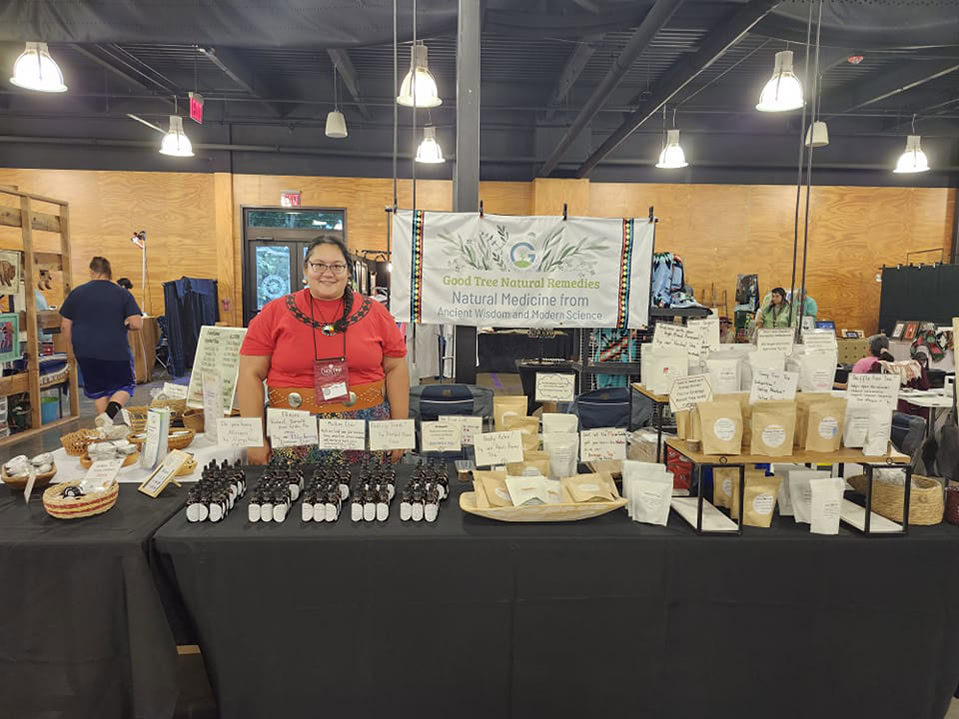
For many people, the world of natural medicine is a mystery. Misconceptions surrounding unfamiliar supplements and complicated regimens often put people off. Dr. Carmen Jones, a licensed naturopathic doctor, wants to change that perception, one cup of tea at a time.
“I honestly think the largest barrier is our knowledge,” Jones said. “People don’t know where to start, or sometimes they start to explore things, and they get a little bit overwhelmed.”
According to Jones, she takes a whole-person approach with her patients, examining physical, mental, emotional, and spiritual health, as well as diet, stress, relationships, and their environment. By taking a big-picture approach to treating her patients, Jones often finds their root causes and sets them on the path to healing.
Jones hears many things about naturopathic medicine. One common misconception is that starting is expensive or intimidating. “I would encourage people to just try teas. They’re readily available these days,” Jones said.
According to Jones, you don’t have to find an exotic tea dealer, either. “You can find them at Walmart, and the companies often market them for what they do.
“[Labels will say] things like digestive aids, or to help with gas and bloating or things for allergies, sleep, stress or energy,” Jones said.
Another misconception Jones hears is that teas need to be drunk while they’re hot. “A lot of people think herbal tea has to be ingested hot, and that’s not true. You can make iced tea out of any of those teas,” she said.
For Jones, those grocery store shelves represent a gateway, a good way to explore herbal medicine.
For those who want to explore beyond the teas, there are more options to consider.
Beyond the tea aisle, Jones points out that the backyard, the porch, or even a windowsill is a great place to grow some of your own food.
Jones encourages people to try growing some of their own food, not just for the health benefits, but because of what’s been quietly disappearing from conventionally grown food over the past several decades.
“Some of the availability of micronutrients has changed over the last 40 or 50 years just because of conventional agriculture and farming practices,” she said. “Our soil doesn’t have the same amount of nutrients in it as it used to.”
When soil isn’t replenished with minerals, those deficiencies show up in the food we eat and eventually in our bodies.
According to Jones, growing even a small amount of your own food allows you to amend the soil yourself with organic matter and nutrients and recover some of what’s been lost.
“Whether that’s in a container on your windowsill, potted plants on the back porch or a full-blown garden,” said Jones. “I’m always encouraging people to try.”
For those without space to grow, farmers markets and working with friends or family who already garden can make a real difference.
Even if you can’t grow plants, Jones says there’s something that can help, and you likely step over or on it daily.
Many of the plants we call weeds, she says, are among the most medicinally valuable available.
Her personal favorite is yarrow, a plant she learned about as a kid.
“It was one of the first plants I learned as a little girl,” recalled Jones. “When you’re riding your bike and fall off and scrape your knee, yarrow kind of came to the rescue.”

Yarrow has a history of battlefield use due to its natural antibacterial properties. It can help slow bleeding, which can promote faster wound healing. Jones uses it in several of her own products, including a first aid salve.
“It’s also great for allergies and bug bites,” Jones said.
Jones recommends starting with “Medicinal Herbs: A Beginner’s Guide” by Rosemary Gladstar or exploring available educational resources on the Mountain Rose Herbs website.
As for the skeptics? Jones welcomes them to the conversation.
“When they experience the healing power of the body, they’re often more motivated,” Jones said. “In a way, they’re easier to work with.”
Learn more about Dr. Carmen Jones, Naturopathic Doctor on Facebook and on her website.