

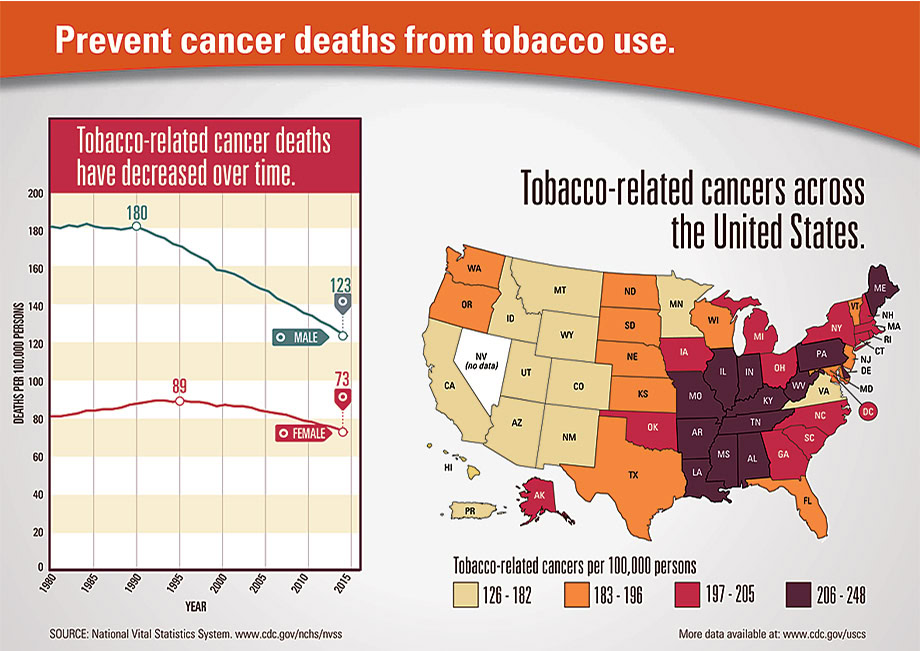
According to the CDC, Native Americans have a higher smoking rate than other groups at 43.3% compared with 27.7% nationally. Tobacco use among Native American men is even higher at 49.7%.
These higher smoking rates are reflected in key health statistics. Cardiovascular disease, which is often linked to smoking, is the leading cause of death for Native Americans. Lung cancer, largely tied to smoking, is the leading cause of cancer deaths. The risk of developing Type 2 diabetes is 30% to 40% higher for smokers, and Native Americans are nearly three times more likely to have type 2 diabetes than white adults.
A National Institutes of Health study found that tobacco companies targeted Native communities with price promotions, casino and bingo advertising, and powwow sponsorships, making cigarettes more accessible and increasing addiction risks, especially for youth. An NIH report also cited an internal cigarette company memo describing smoking as a symbol of rebellion, a message designed to appeal to young people.
Children are more likely to smoke if a parent does. For many, access begins at home. Quitting reduces that risk.
The Choctaw Nation’s Tobacco Cessation Program offers four months of support for CDIB-eligible patients and employees. The program includes monthly in-person visits, nicotine replacement therapy and two medication options. Clinic Director Heidi Hackett says it often takes multiple attempts to quit and that having consistent support, even from pharmacy staff, can make the difference.
According to the FDA, nearly 70% of U.S. adult smokers wanted to quit in 2015. In 2018, 55% tried, but only about 8% stayed smoke-free for six to 12 months. Cigarettes are engineered to deliver nicotine rapidly to the brain, which makes quitting difficult.
Hackett encourages anyone trying to quit to keep going, no matter how many past attempts they have made. The first appointment includes a discussion of your tobacco history and any concerns. Participants also receive a survival bag with items meant to motivate them during cravings.
Quitting brings immediate and long-term
health benefits:
- After two weeks, breathing improves.
- After one year, heart attack risk is cut in half.
- After five years, stroke risk matches that of someone who never smoked.
- After 10 years, lung cancer risk is reduced by half.
The program also supports people quitting e-cigarettes, dip and snuff. According to the 2019 National Youth Tobacco Survey, 16.1% of Native American middle schoolers and 40.4% of high schoolers used e-cigarettes, rates that are higher than the general population.
Hackett says participants often inspire others. “I have seen where a family member or friend said, ‘So-and-so was able to quit, and they used y’all, so I decided it was time for me too,’” she said.
Every quit attempt is different, whether it is the first or the tenth. Whether you quit cold turkey or use patches, gum or lozenges, the Choctaw Nation’s Cessation Program can help you live a healthier life. To get started, talk with your primary care provider or employee health office for a referral.
For those not eligible for the program, additional resources include:
- Indian Health Service tobacco prevention information
- Quit-Smoking Guidance
- CDC Quitline: 1-800-QUIT-NOW (784-8669)

Traditional tobacco vs commercial tobacco
The Choctaw name for tobacco is hakchuma. Traditional hakchuma and commercial hakchuma are very different. They’re planted, grown, harvested, prepared and used in different ways. Traditional hakchuma has been used by Native Americans for centuries, with some varieties known to have been grown and smoked in eastern North America for at least 2,000 years.
Commercial tobacco contains chemicals and additives not found in traditional hakchuma. Traditional hakchuma has nicotine, but at lower levels, due to the natural curing process and mixing with other plants.
The way that hakchuma is used among different tribes varies greatly. When used as a medicine, hakchuma can be prescribed as a way to promote physical, spiritual, emotional, and community well-being. It may be used as an offering to the Creator or to another person, place, or being.
In some tribes, the roles of growing, harvesting, and preparing traditional hakchuma are held by specific groups of people who use traditional ways to prepare it for a specific use.
The January 2011 Iti Fabvssa talks about some of the ways the early Choctaws used hakchuma:
Hakchuma plants were traditionally planted and tended by Choctaw medicine people, both male and female. After the plants matured, their leaves were removed and stored as dried rolls, tied up with bark strips.
Choctaws often added various ingredients to their tobacco to produce different flavors, including leaves from the sweet gum tree and the leaves of two different species of sumac. These leaves were dried and rubbed into small pieces before they were mixed with the tobacco.
In times of scarcity, Choctaws of the past, and some people still today, smoke a wild native plant called “rabbit tobacco,” or bvshuchak.
Read more at Iti Fabvssa.