

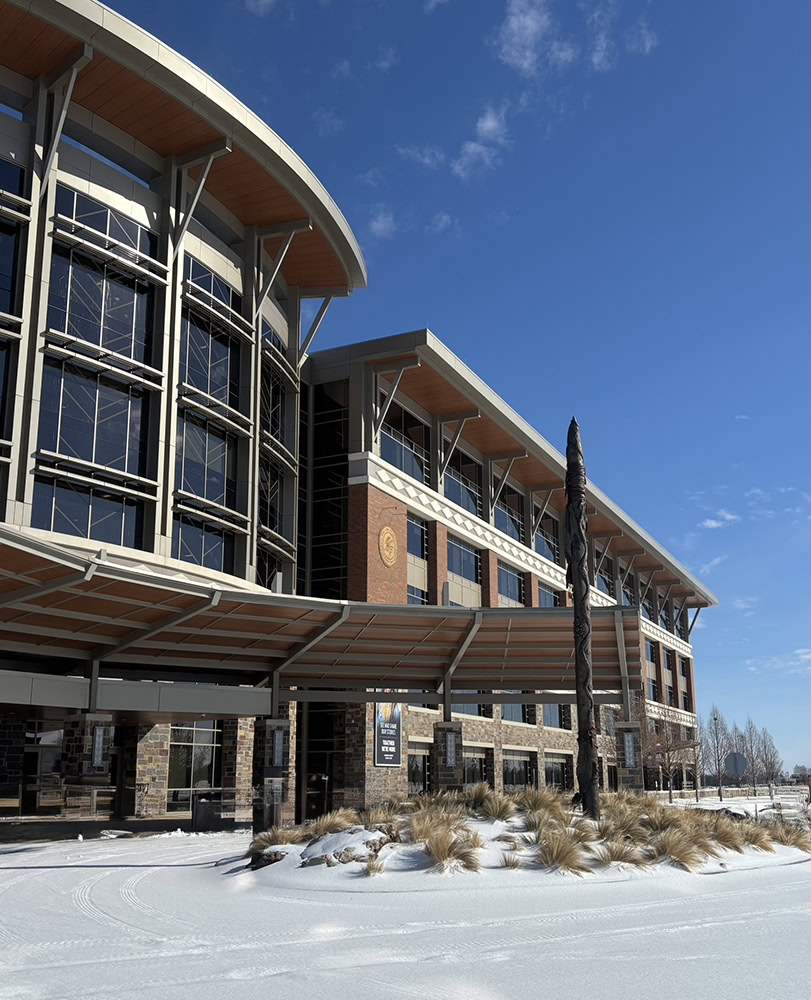
Winter Storm Fern brought ice, snow and dangerously low temperatures to a large portion of the United States from Jan. 23 to Jan. 27, 2026.
The Choctaw Nation Emergency Management team was there for tribal members on the reservation, both during and after the storm. The Office of Emergency Management (OEM) coordinated resources, handling about 30 calls for assistance, including stranded motorists and power outages.
Jeff Hansen, senior director of community protection with Choctaw Nation OEM, said, “What we do is route those calls. If it’s something that we can help with directly, we will. If it’s tree limbs falling on power lines, we would get our contractors out to clear them. If it’s something like a frozen pipe or a septic system that’s frozen up, we would refer those over to housing or the Office of Environmental Health, and that department would address those problems.”
OEM also teams up with CNO facilities maintenance to clear parking lots and check buildings, monitoring and repairing any problems that might be caused by extreme temperatures.
Being a communications line to senior leadership is also an important role OEM plays, allowing them to decide when to open and close for the safety of tribal members and employees.
“Giving them good data to make decisions on, do we stay open or do we close,” said Hansen.
The storm’s effects varied across Choctaw Nation’s reservation area. While Hansen said it was primarily a sleet event, some areas were hit harder than others.
“The farther south you went along the Red River counties, there was freezing rain that led to roughly about 2000 power outages in McCurtain County,” said Hansen.
Hansen stressed the importance of staying weather-aware.
“The biggest thing that people need to do is stay weather aware. Making sure that you’ve got multiple methods of receiving warnings, with something like a weather radio and you’re signed up for a text message service,” said Hansen.
Being ready to be self-sufficient for three days is important.
The First 72 on You program offers several tips for preparing for emergencies that can happen at any time of year.
You can find resources on how to prepare for different types of emergencies at choctawnation.com/about/first-72-on-you/.
“We have seen in the past, where somebody will call and they’ve got a problem, but we can’t get to them immediately. The roads can be impassable due to debris or ice, so make sure that you’ve got that level of preparedness to take care of yourself until we can get there and start addressing the problem,” Hansen said.
Taking the time to prepare for an emergency can make a big difference in how you get through it.
Emergency services are already often overwhelmed, and making sure you are prepared can help relieve some of that stress on CNO’s emergency departments.