

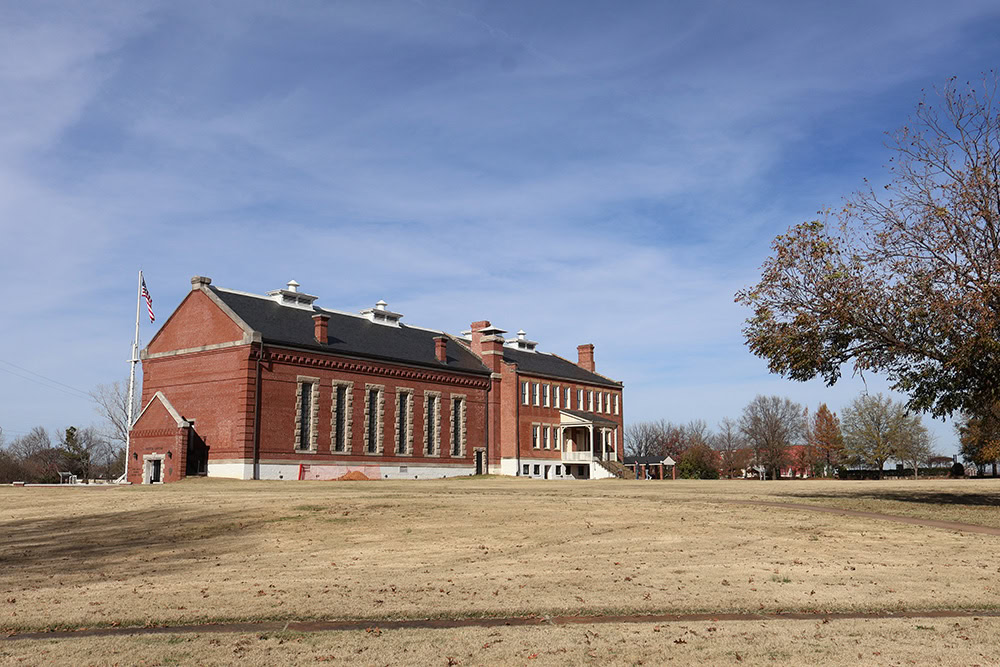
On July 11, 2025, the Intertribal Council of the Five Civilized Tribes (ITC) signed a resolution calling for continued funding for the Fort Smith Historic Site in Fort Smith, Arkansas, through the National Park Service.
The resolution notes that the council represents more than 815,000 Cherokee, Chickasaw, Choctaw, Muscogee (Creek) and Seminole people, descendants of those who survived the Trail of Tears.
Those ancestors entered what was then known as Indian Country through the historic site the July resolution seeks to protect.
Fort Smith: Gateway to Indian Country
Often overlooked in regional history, Fort Smith served as the gateway to what became Indian Territory.
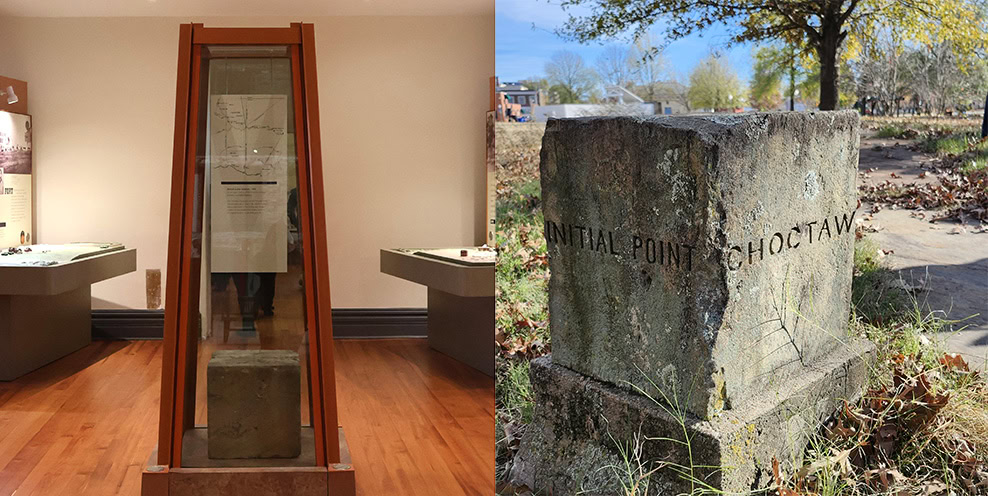
A boundary marker at the site predates statehood for both Arkansas and Oklahoma, delineating the reservation boundary with the Cherokee Nation and reaffirming the treaties that established the reservation.
The original marker is preserved in the site museum; a replica stands at its original location. Fort Smith remains an anchor for the shared history of tribal nations, underscoring why preserving and funding the site is vital for future generations.
Dr. J. Adam Beeco became the park’s superintendent in December 2025, overseeing park management, resource protection, staff, budget, community engagement and strategic planning.
According to Dr. Beeco, what makes the site important is its unique coverage of over 80 years of American history.
“The site holds significant historical and cultural importance due to its crucial role as a 19th-century military outpost on the western frontier; its involvement in Native American migration, territorial issues and sovereignty; its position on the western front of the Civil War; and its later function as a federal court that brought national attention to law and order in the West, helping shape both regional and national narratives of westward expansion and justice,” said Dr. Beeco.
When asked about the site’s significance to the broader history of the United States and its connection to the Choctaw story, Dr. Beeco explained that Fort Smith has been a part of this story from the very beginning from when it was established in 1817 to help keep peace between the Cherokee and the Osage, to the very end in the mid-1890’s, when the federal court presiding over Indian Territory at Fort Smith was closed.
Proposed Federal Budget Cuts
In May, the Trump administration’s proposed 2026 budget would have cut the National Park Service by more than $1 billion, jeopardizing operations at more than 400 parks. It would have been the largest cut in the agency’s 109-year history.
In response to these proposed cuts, both the ITC and the City of Fort Smith formally urged continued funding for the historic site.
The resolution passed by the ITC highlights the site as vital for sharing tribal and regional history, attracting thousands of visitors and serving as an official stop on the Trail of Tears National Historic Trail.
The City of Fort Smith’s resolution, signed a month later, called for continued and increased funding for the site through the National Park Service, emphasizing its national economic and historical significance to Fort Smith, Arkansas, Oklahoma, sovereign tribal nations, and the United States.
These partnerships are becoming increasingly important for the site’s future.
“Strong relationships with partners—such as the City of Fort Smith and the tribes represented by the Intertribal Council (Cherokee, Chickasaw, Choctaw, Muscogee [Creek], and Seminole Nations)—are critical to our success at the Historic Site,” said Dr. Beeco. “These partnerships enable collaboration across a wide range of initiatives, including the accurate interpretation of Fort Smith’s deep and complex 19th-century history, regional and local tourism efforts, and educational collaborations.”
Bipartisan efforts in the Senate as of Jan. 5, 2026, are focused on averting proposed funding cuts, reinforcing the critical argument for the sustained protection of the Fort Smith site.
Visiting the Fort Smith Historical Site
Fort Smith has several events planned at the historic site this year, including celebrations tied to America’s 250th anniversary:
- April 25: 250th Anniversary/Fort Smith Darby Days
- July 25: Cherokee Bill Anniversary Symposium
- Oct. 3–7: Annual Fort Smith Fall Festival
- Date TBD: Exhibit on tribal treaties, in collaboration with tribal nations and the National Park Service
“Fort Smith National Historic Site is a remarkable community asset with national significance. For more than 80 years, it was the setting for pivotal events that helped shape the fabric of the United States,” said Dr Beeco. “Having such a historically rich and meaningful site right in our own backyard is an extraordinary opportunity for education, reflection and community engagement.”
For more information on the site, visit https://www.nps.gov/fosm/.