

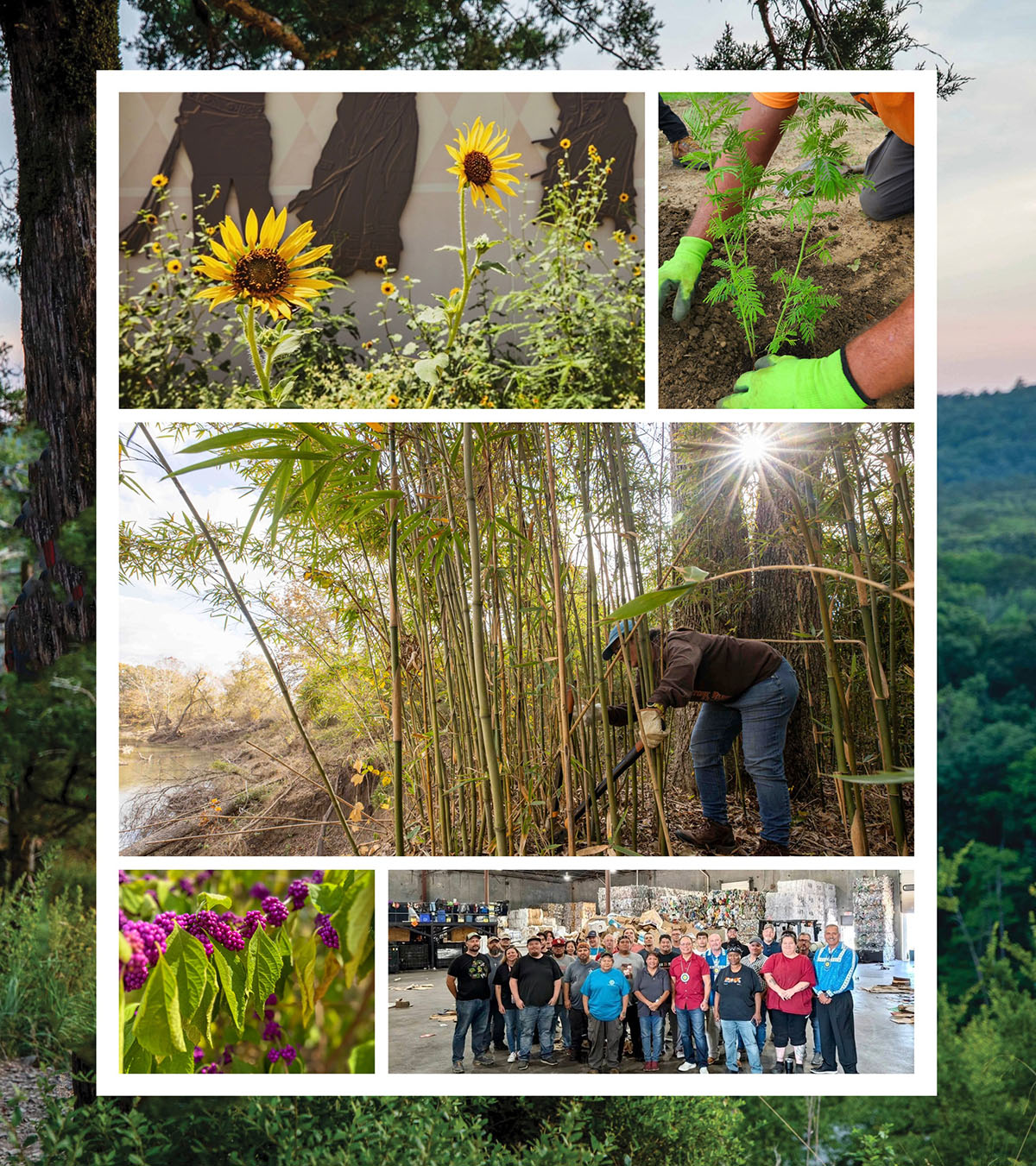
Every year on April 22, people worldwide celebrate Earth Day and take action to protect the environment.
From cleanups to tree plantings, the day reminds people of their shared responsibility to care for the planet.
For the Choctaw people, this commitment is deeply rooted in traditional teachings about living in harmony with the land and honoring nature’s gifts for future generations. While Earth Day was first observed in 1970 and now marks its 56th anniversary, the Choctaw Nation’s values of respect and stewardship for the Earth have guided its people for centuries, shaping environmental efforts to this day.
This Earth Day, the Choctaw Nation is celebrating a major milestone in its environmental efforts.
The Choctaw Nation Recycling Department has processed more than 50 million pounds of recyclable materials, reflecting the Nation’s ongoing commitment to protecting natural resources across southeastern Oklahoma.
According to Tracy Horst, director of environmental compliance, this recent recycling milestone highlights the Nation’s long-standing commitment to environmental responsibility.
“This achievement is a testament to our values and reflects our responsibility to care for the land,” Horst said.
The Choctaw Nation recycling initiative was established in 2007 to reduce landfill waste and encourage tribal members and employees to embrace environmentally sustainable habits.
Through its environmental programs, the Choctaw Nation offers several ways for community members to get involved in conservation efforts, reduce waste and adopt responsible environmental practices across the reservation. These initiatives include two recycling centers and access to roll-off dumpsters, making it easy for both tribal and non-tribal residents to recycle a wide range of materials.
The Choctaw Nation Environmental Protection Services Department also provides information and guidance to help tribal members protect natural resources and promote a sustainable environmental future for the reservation. The department works in several areas, including environmental assessment, environmental compliance, waste resource management, wildlife conservation and recycling.
The department oversees the Nation’s environmental programs and credits much of the initiative’s success to strong community participation and support from tribal leadership.
“This accomplishment wouldn’t be possible without the participation of our Choctaw community, partners and dedicated team members,” said Tye Baker, senior director of environmental protection services, in a recent press release.
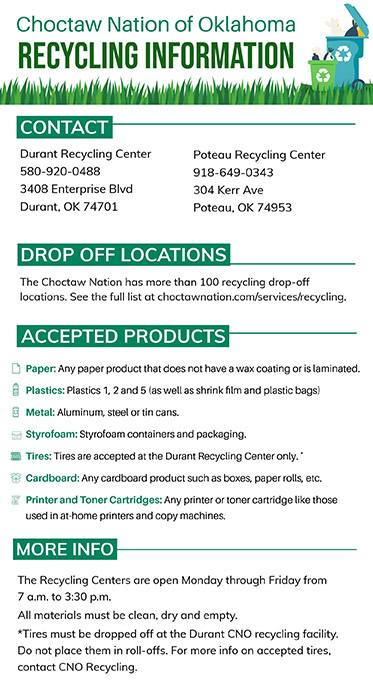
There are more than 120 Choctaw Nation recycling collection sites across 10 counties in southeastern Oklahoma, providing convenient locations for residents to recycle materials that might otherwise end up in landfills.
Recycling centers are open Monday through Friday from 7 a.m. to 3:30 p.m.
The recycling program accepts a variety of materials, including aluminum cans, cardboard, paper products, plastic bags, plastic film, several types of plastics, printer ink cartridges, shredded paper, steel and tin cans and Styrofoam.
Officials request that recyclable materials be emptied before being dropped off.
With dozens of recycling collection sites throughout the Choctaw Nation reservation, tribal members have ample opportunities to participate in environmental conservation efforts.
Although the holiday highlights environmental awareness each spring, individuals can help protect the planet year-round.
According to earthday.org, there are many simple ways people can make a difference in their daily lives.
Volunteering for local cleanup efforts, contacting local officials about environmental issues, shopping at farmers markets, switching to clean energy sources and growing an organic garden are just a few ways individuals can contribute to a healthier environment.
Whether participating in Earth Day events or making changes at home, every effort contributes to protecting the environment and preserving natural resources for future generations. This Earth Day, take an active role in conservation. Find the nearest recycling collection site, gather recyclables and make a drop-off. These actions can have a lasting impact on the community and the environment.