

AIR QUALITY INFORMATION
The air we breathe is not as empty as it may appear. Particles that are invisible to the eye enter your lungs with every breath. Sometimes, there are more particles than other times. The current levels can be affected by where you live, the amount of traffic, and even the direction the wind is blowing, which can determine what enters your lungs.
Wildfire smoke and Sarahan dust can travel great distances, even across oceans and fill the air you breathe.
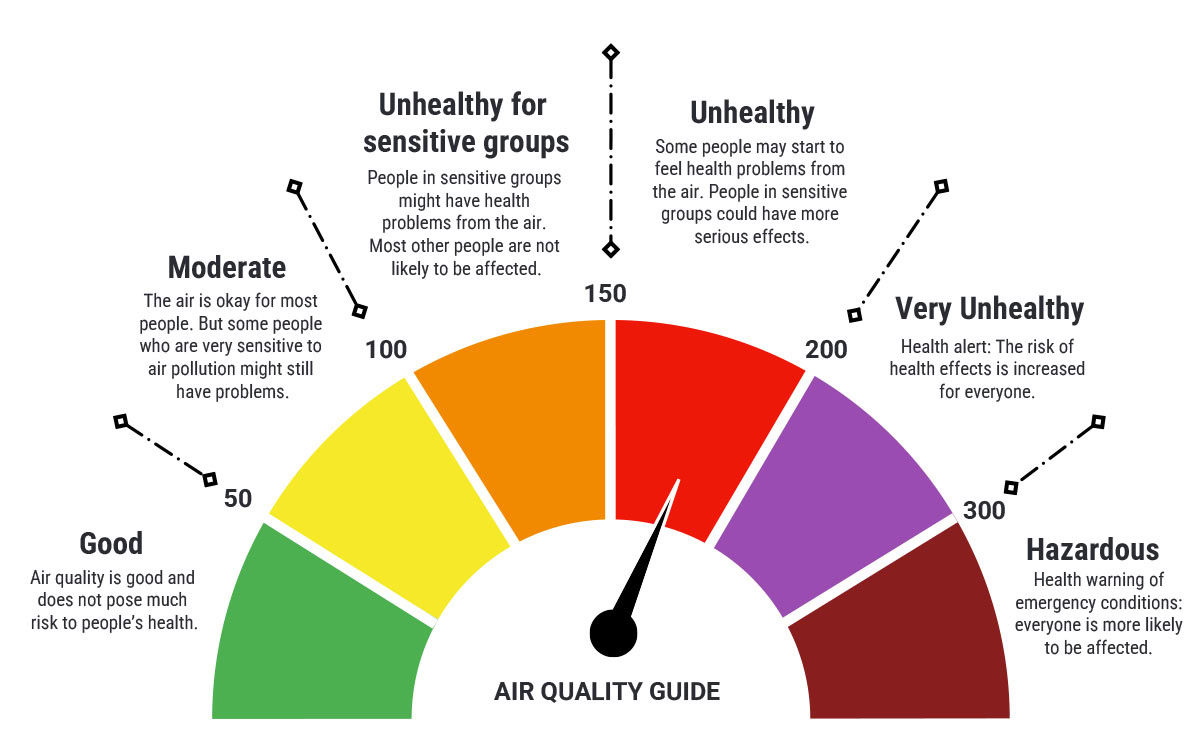
Knowing the air quality conditions before you go outside can help reduce your exposure to poor air. The Choctaw Nation uses the Environmental Protection Agency’s (EPA) Air Quality Index (AQI) to show what the air quality is outside. The AQI uses an easy to identify color-coded system to alert people to the AQI.
Green = Good
Yellow = Moderate
Orange = Unhealthy for Sensitive Groups
Red = Unhealthy
Purple = Very
Unhealthy
Maroon = Hazardous
In addition to AQI flags placed around the reservation, you can get current conditions and sign up for text alerts by scanning the justair.com QR code.
DIY AIR CLEANERS
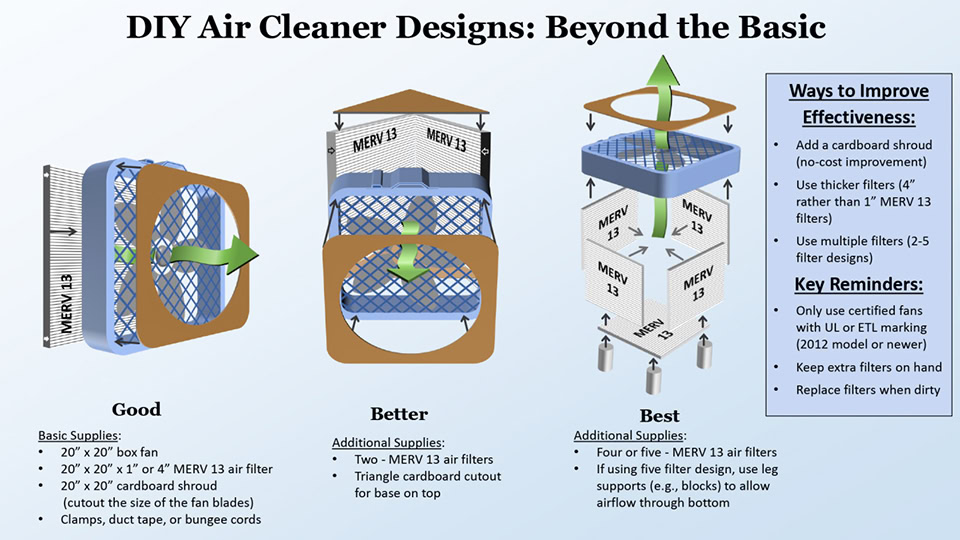
DIY air cleaners are most commonly called Corsi-Rosenthal boxes. You can make your own by attaching multiple MERV 13 filters to the sides of a standard box fan using duct tape and cardboard, creating an effective, low-cost air filtration system. Simpler versions that use only a single filter attached to a fan are often called filter fans.
DIY air cleaners were as effective as a small commercial air cleaner in reducing fine particle, or PM2.5, concentrations.
DIY air cleaner performance could be improved by adding a no-cost cardboard shroud to block recirculating air flow past the fan blade tips.
Designs that incorporated multiple filters showed increased air cleaning capacity and were more cost effective.
DIY air cleaners with dirty filters loaded with smoke or dust were almost completely ineffective. Be sure to replace dirty filters.
EPA research showed that DIY air cleaners were just as effective as commercial air cleaners. However, they were louder and required more power to operate. The lower upfront cost and less expensive replacement filters made DIY air cleaners more economical.